

Grounded: Creating with Land in Contemporary Native American Art
Can we think of a 21st century Arizona through expressions of place inherent in Arizona’s Indigenous arts? In this presentation, I focus on the representation of place that Indigenous artists in Arizona are making in their art. From jewelry, to weaving, to photography, the lived landscape features prominently in Indigenous art. These expressions signify place, culture, tradition, and national aspirations. As a Diné jeweler with decades of experience in Native art spaces, I will demonstrate how the stones and materials connect us to our national homelands in Diné bikeyah and are also a representation of longstanding trade routes between tribes in the southwest. I will show how corn – represented in culture and art – is also a product of trade, and how Diné rugs are intimately linked to the land, including the wool and dye that comprise it. These are all examples of placemaking in Native Arizona. Ultimately, Native space is not limited to today’s boundaries but are expressions of kinship and reciprocity to the land and non-human entities that also inhabit it. Indigenous art in Arizona confounds our understanding of Arizona. Art is not just a reflection of what is there, but an imagined sense of what is possible.
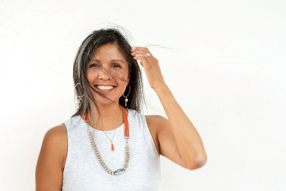
Nanibaa Beck is a 2nd generation Dine’ (Navajo) jeweler. Since 2013, her work reflects Native creative expressions and the growth of an Dine’ ‘Asdzaa (Navajo woman) as a designer and maker. Being intricately connected to the creative process at an early age motivated Beck to become more knowledgeable about the multifaceted areas surrounding Native American Art. Her anthropology background includes work and fellowships with renowned museums, including the Heard Museum, the National Museum of the American Indian, the Peabody Essex Museum and the Field Museum.